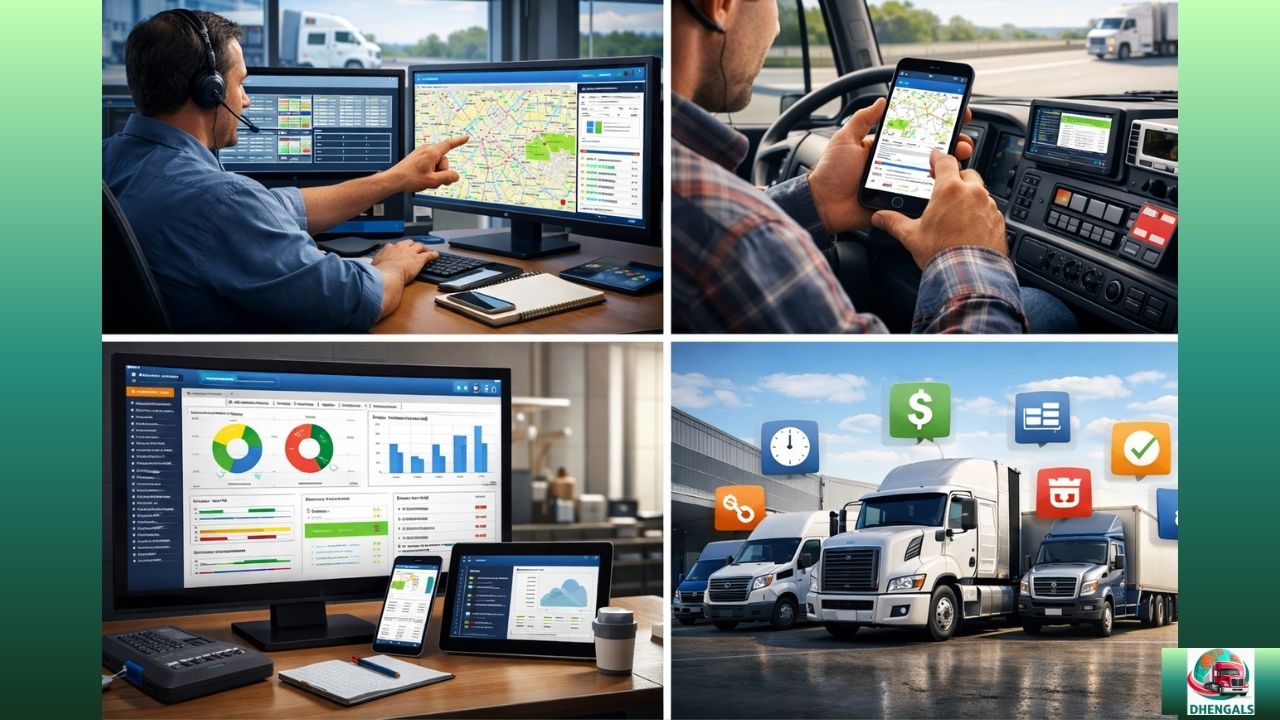
Dispatching trucks today is harder than ever, and choosing the Top Trucking Dispatch Software in the United States of America or North America can make or break your business. Whether you run a small operation or manage a large fleet, the right truck routing and dispatch software simplifies planning, improves communication, and cuts costly delays.
This guide explains how modern cloud-based trucking software works, highlights the key features, and identifies the solutions that deliver tangible results for fleets and owner-operators. You’ll learn how advanced fleet dispatch software supports real-time GPS tracking, driver availability updates, and intelligent route planning while reducing fuel costs and compliance headaches. By the end, you’ll know exactly what to look for to future-proof your trucking operations.
What Is Trucking Dispatch Software?
Trucking dispatch software is the digital brain behind daily trucking operations. It helps you assign loads, manage driver availability, plan routes, and track trucks from pickup to delivery. Instead of juggling calls, spreadsheets, and paperwork, everything is managed within a single dispatch system for truckers.
Modern trucking dispatching software often overlaps with trucking management software and transportation management software (TMS). The difference is focus. Dispatch software for fleets concentrates on daily execution. TMS tools handle broader logistics dispatch software needs like contracts and freight planning. Most cloud-based trucking software today blends both into one platform.
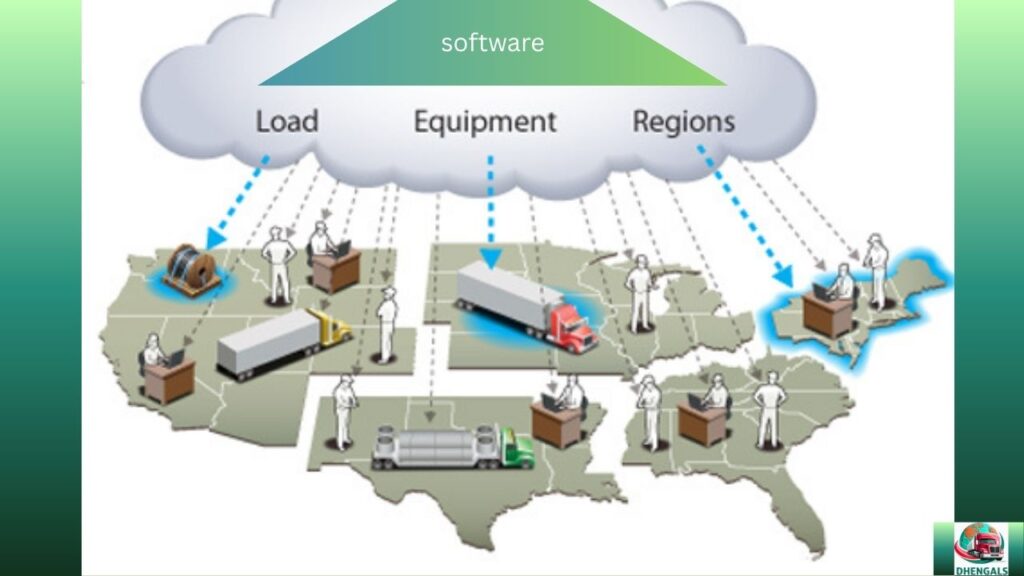
How Trucking Dispatch Software Works (Step-by-Step Process)
The process starts when a load enters the system. That load may come from freight brokers, direct shippers, or internal planning. The software verifies driver availability, equipment type, and hours of service using electronic logging devices (ELDs). Dispatch planning happens in minutes instead of hours.
Next comes route planning and route optimization. The system selects efficient paths based on distance, traffic, and delivery windows. Real-time GPS tracking then keeps everyone informed. Drivers use a mobile driver app for driver communication, proof of delivery, and ETA updates. Once delivery finishes, invoicing and billing, driver payroll, mileage tracking, and accounting integration follow automatically. This is trucking workflow automation in action.
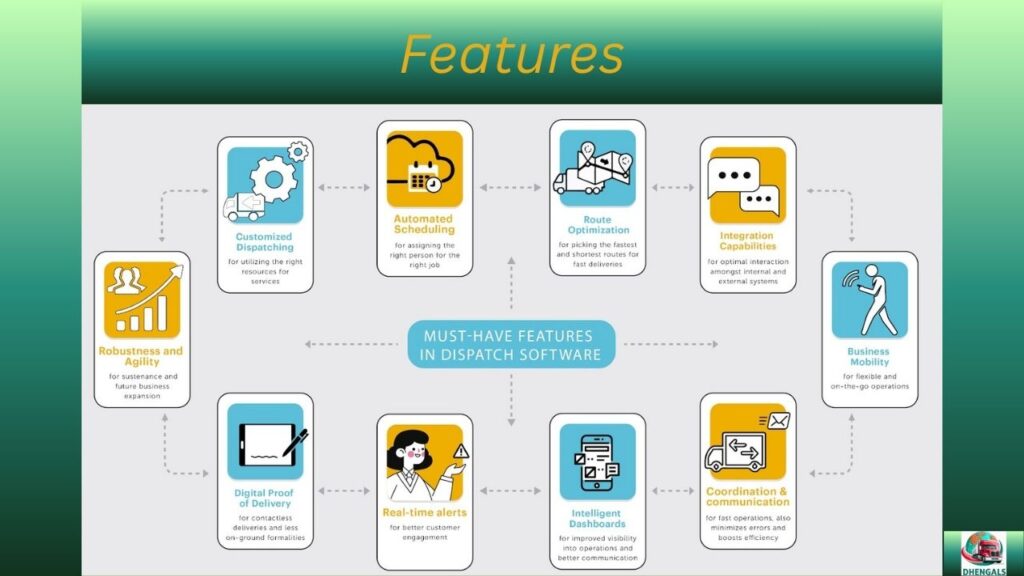
Key Features of the Best Trucking Dispatch Software
Strong truck routing and dispatch software always includes route optimization, load scheduling, and fleet tracking. These features reduce empty miles and support fuel cost optimization. Real-time GPS tracking provides dispatchers with instant visibility, enhancing delivery management across regions.
Advanced platforms add IFTA reporting, fuel card integration, fleet maintenance tracking, and asset tracking. Analytics and reporting tools create performance dashboards that expose hidden inefficiencies. When accounting integration and QuickBooks integration are included, trucking operations software becomes a complete control center rather than a simple scheduling tool.
Benefits of Using Trucking Dispatch Software for Fleets & Owner-Operators
For fleets, dispatch software improves operational efficiency. Fewer phone calls. Less paperwork. Faster decisions. Dispatch software for owner operators delivers clarity. You see your loads, miles, revenue, and costs in one place.
There is also a human benefit. Drivers receive clear instructions through SMS notifications and apps instead of confusing calls. That improves customer satisfaction and retention. Over time, maintenance cost reductions and fuel savings compound, and many U.S. fleets report cost reductions of 10% to 25% after switching to fleet management and dispatch software.
How to Choose the Right Trucking Dispatch Software
Start with your business model. LTL and truckload carriers need different tools than last-mile delivery fleets. Freight brokers require deeper dispatch planning and reporting features. Scalability matters if you plan to grow.
Ease of use is critical. Complex systems slow teams down. Support quality matters just as much as features. A responsive vendor saves hours during breakdowns. Always test a demo. Real-world usage reveals more than marketing pages ever will.
Pricing & Cost Factors of Trucking Dispatch Software
Pricing varies widely across trucking software solutions. Some tools charge per truck. Others charge per user. Enterprise platforms often require custom quotes. Monthly pricing in the U.S. typically ranges from $20 per truck to several hundred dollars for advanced platforms.
Hidden costs matter. Setup fees, training, and integrations add up. However, the return often outweighs the expense. Faster dispatching, better compliance management, and fewer errors pay for the software within months, not years.
Comparison of the Top Trucking Dispatch Software
Below is a simplified comparison table based on real use cases across the U.S. market.
|
Software |
Best For |
Core Strength |
|
ProTransport |
Freight Brokers, LTL Fleets |
Accounting and Analytics |
|
Onfleet |
Delivery Last-Mile |
Live Tracking and SMS |
| TruckingOffice | Small Fleets | IFTA and Affordability |
|
Axon |
Heavy Haulers |
Custom Reporting |
| Trimble | 3PLs and Brokers |
Compliance and Scale |
This comparison shows why one-size-fits-all does not work in trucking operations software.
Here are the top 5 Trucking Dispatch Software in North America;
1. ProTransport
ProTransport dispatch software is built for freight brokers and mid to large carriers. It combines dispatch, accounting, fleet maintenance tracking, and analytics in one platform. Many U.S. operators like its performance dashboards and operational efficiency insights.
The system integrates with fuel cards and accounting tools. While pricing requires a demo, ProTransport shines for fleets that want deep control without juggling multiple tools.
2. Onfleet
Onfleet’s last-mile delivery software focuses on speed and visibility. Retail and food delivery fleets use it heavily across North America. Real-time GPS tracking, drag-and-drop dispatch, and SMS notifications stand out.
Customer updates improve trust. Proof of delivery features reduce disputes. Onfleet is not ideal for long-haul trucking but excels in urban delivery management.
3. Trucking Office
Trucking Office dispatch software was built by truckers. It targets small fleets and owner-operators. Accounting integration, IFTA reporting, and mileage tracking are its strongest points.
Pricing starts low. That makes it attractive for startups. While it lacks enterprise-level depth, it delivers solid value for small operations that need reliable trucking management software.
4. Axon Trucking Software
Axon trucking software has decades of industry history. It supports specialized hauling like oilfield and livestock. Custom analytics and real-time fleet tracking help identify weak spots.
The learning curve is steeper. Pricing is higher. Still, Axon works well for complex operations that need detailed reporting and dispatch planning.
5. Trimble
Trimble TMS is an enterprise-grade platform. It supports carriers, brokers, and 3PLs across North America. Safety and compliance features are strong. Route planning and asset tracking are deeply integrated.
Trimble trucking dispatch software fits growing fleets that need scalability and advanced compliance management. Training takes time, but the payoff is long-term stability.
Common Mistakes to Avoid When Choosing Dispatch Software
Many fleets buy software based only on price. That often backfires. Cheap tools lack scalability and slow growth. Another mistake is ignoring driver usability. If drivers hate the mobile driver app, adoption fails.
Skipping demos is risky. So is ignoring integration needs. Dispatch software must connect smoothly with ELDs, accounting tools, and fuel systems. Otherwise, efficiency gains disappear quickly.
Crux: Which Trucking Dispatch Software Is Best for You?
There is no single winner for everyone. Small fleets benefit most from TruckingOffice. Last-mile operators thrive with Onfleet. Complex carriers gain value from Axon and Trimble. ProTransport sits in the middle, offering balance for brokers and carriers. The best trucking dispatch software in North America is the one that fits your operation today and tomorrow. Choose wisely. The right system becomes your silent partner on every mile you drive.
FAQs (Frequently Asked Questions)
What is trucking dispatch software used for?
Trucking dispatch software helps you assign loads, track trucks, manage drivers, and handle billing from one centralized system.
Which trucking dispatch software is best for small fleets?
Trucking Office is a popular choice for small fleets because it offers affordable pricing, IFTA reporting, and simple accounting tools.
How much does trucking dispatch software cost in North America?
Pricing usually starts at around $20 per truck per month and can increase depending on features, fleet size, and integrations.
Can owner-operators use trucking dispatch software?
Yes, many platforms are designed specifically for owner-operators and help with route planning, compliance, and invoicing.
Is trucking dispatch software the same as a TMS?
Not exactly. Dispatch software focuses on daily operations, while a TMS handles broader logistics and freight management.