
If you are new to trucking in the United States, the language can feel overwhelming. Dispatchers speak fast. Brokers use shorthand. Drivers mention codes you have never heard before. Understanding the common and important terms used in the USA trucking industry helps you avoid confusion and costly mistakes. Once you learn the vocabulary, like Bill of Lading, Linehaul rate, CSA safety score, Accessorial charges, or Electronic Logging Device (ELD), everything starts to make sense.
The U.S. trucking industry moves over 70 percent of the nation’s freight each year, according to the American Trucking Associations. That means millions of loads, contracts, and compliance checks every month. Let’s break down the most important terms every beginner should know.
Basic Trucking Roles You Must Understand
Every shipment involves key players. The shipper is the company sending the goods. The consignee is the one receiving them. The carrier is the trucking company moving the freight. A freight broker connects shippers and carriers for a fee.
Newcomers often confuse the difference between shipper and carrier. The shipper owns the freight. The carrier transports it. Knowing this simple distinction prevents billing disputes and contract misunderstandings.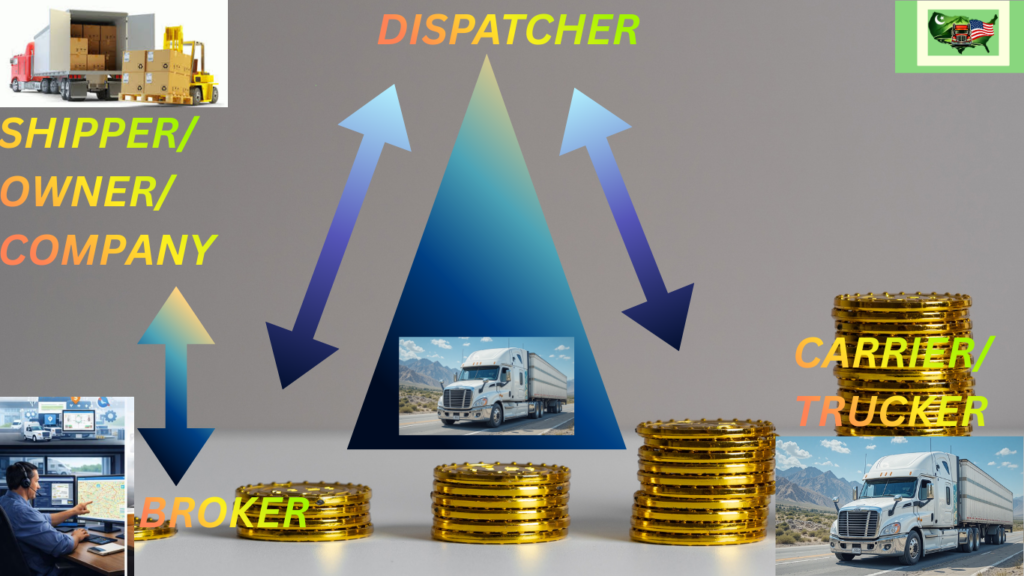
Essential Equipment Types in USA Trucking
Not all trucks are the same. A dry van is the most common enclosed trailer used for general freight. A reefer trailer is temperature-controlled for food or medicine. Flatbed trailers carry oversized or heavy cargo that cannot fit inside enclosed trailers.
Understanding equipment types helps you choose the right load. If you book refrigerated goods without a reefer, you will lose money fast. Equipment selection directly impacts safety and profit.
Important Pricing and Payment Terms
Money in trucking revolves around rates. The linehaul rate is the base payment for moving freight from pickup to delivery. A fuel surcharge is added to cover diesel price changes. Accessorial charges are extra payments for additional services.
For example, detention pay applies when a driver waits too long at a shipper. Layover pay applies when a load is delayed overnight. Knowing how rates are structured protects your margins.
Dispatch and Load Management Terms
Dispatch is the heart of operations. A load board is an online marketplace where brokers post available freight. Deadhead refers to driving an empty truck. High deadhead miles reduce profits.
Rate confirmation is a document confirming the agreed-upon price and terms. Without a signed rate confirmation, payment disputes can occur. Always review details carefully before dispatching a truck.
Compliance and Safety Terms Every Beginner Must Know
Safety is not optional in U.S. trucking. The Federal Motor Carrier Safety Administration (FMCSA)regulates trucking under the U.S. Department of Transportation (US DOT).
Important terms include DOT number, MC number, and CSA safety score. Drivers must follow Hours of Service rules tracked through Electronic Logging Devices. Companies must maintain driver qualification files and conduct drug and alcohol testing programs.
If you ignore compliance, fines can reach thousands of dollars. In serious cases, operating authority can be revoked.
Freight Condition and Delivery Terms
At pickup, a Bill of Lading is issued. It serves as a receipt and transport contract. At delivery, the Proof of Delivery confirms that the shipment arrived.
If cargo is damaged, it may lead to a freight claim. However, most daily trucking conversations focus more on load status, transit time, and delivery appointments rather than legal disputes.
Common Operational Terms Used Daily
Length of haul describes how far freight travels. Short haul usually means under 250 miles. Long haul often means interstate travel across several states.
Gross vehicle weight rating refers to the maximum safe operating weight of a truck. Overloading can lead to fines and safety violations. Scale tickets confirm legal weight compliance.
Technology Terms in Modern Trucking
A Transportation Management System (TMS) helps companies manage loads, drivers, and invoices. ELD stands for Electronic Logging Device and automatically tracks driver hours.
Fleet tracking systems use GPS to monitor truck location in real time. Technology now plays a major role in safety, efficiency, and profitability.
Why Learning Trucking Terms Matters
When you understand the common and important terms used in the USA trucking industry, you communicate confidently with brokers, drivers, and shippers. You reduce costly errors. You protect your authority.
Trucking is not just about driving. It is about contracts, compliance, logistics strategy, and smart negotiation. Master the language first. Success follows naturally.
Conclusion
Understanding the important terms used in the USA Trucking Industry gives you a strong foundation for success. When you know how pricing works, what compliance requires, and who is responsible for each step, you avoid confusion and costly errors. Clear knowledge builds confidence in negotiations and daily operations. Trucking in the United States is highly regulated and competitive, so speaking the industry’s language sets you apart. Whether you are a beginner, dispatcher, owner-operator, or fleet manager, mastering these terms helps you operate smarter, stay compliant, and grow steadily in a demanding but rewarding industry.
Frequently Asked Questions (FAQs)
What are the common and important terms used in the USA trucking industry?
They are everyday words and phrases used in freight, dispatch, pricing, and safety. These include Bill of Lading, linehaul rate, detention, CSA score, and ELD.
Why is it important to understand trucking terminology?
Knowing trucking terms helps you avoid costly mistakes in contracts and payments. It also improves communication with brokers, drivers, and shippers.
What is the difference between a shipper and a carrier?
The shipper owns and sends the freight. The carrier is the trucking company responsible for transporting it.
What does linehaul rate mean in trucking?
The linehaul rate is the base amount paid to move freight from pickup to delivery. It does not usually include fuel surcharges or extra fees.
What is a CSA safety score, and why does it matter?
The CSA safety score measures a carrier’s safety performance under federal regulations. A poor score can lead to audits, fines, or loss of business opportunities.